Showing all 11 resultsSorted by latest
-

Prepper Recommendation: 1.5V Rechargeable Lithium AA System (with 12-Slot Charger)
This is a serious power system, not just batteries. You’re getting high-capacity 1.5V lithium AAs with stable output (no voltage drop issues) and a dedicated 12-slot charger that doubles as storage—meaning control, organization, and repeatability.
Key advantage: 2500 recharge cycles + low self-discharge. That’s long-term sustainability. Add in 0V recovery charging and you’re protected against deep drains—something most basic chargers can’t handle. Fast USB-C charging (~3 hours) also makes it viable with solar setups or backup power stations.
Where this shines:
- High-drain gear (security cams, radios, controllers)
- Rotational battery systems (charge → deploy → rotate)
- Preppers reducing dependence on disposable batteries
Where it fails if misunderstood:
- Not compatible with alkaline/NiMH chargers (dedicated system only)
- Requires a power source to recharge—so without solar/generator backup, you’re limited
Bottom line:
This is a long-term, scalable battery strategy. Pair it with a solar generator or backup power source and you’ve moved from “stockpiling batteries” to owning your power cycle—which is where real preparedness starts.
-

Prepper Recommendation: POWEROWL AAA Lithium Batteries (8-Pack)
This is the kind of battery you trust when conditions aren’t forgiving. These AAA lithium cells deliver long shelf life (up to 10 years), consistent output, and reliable performance in extreme temperatures—far beyond what alkaline can handle.
They’re ideal for critical small gear: headlamps, radios, sensors, and backup electronics that need to work every time. The leak-proof design also protects stored equipment, which matters when gear sits untouched for months or years.
Bottom line: this is primary power for critical AAA devices. If your plan depends on gear working when it counts, this is the level you build around—not cheaper alternatives.
-
Sale!

Prepper Recommendation: POWEROWL AA Lithium Batteries (4-Pack)
This is what “reliable power” actually looks like. These lithium AA batteries are built for long-term storage (up to 10 years), high capacity, and consistent performance across extreme temperatures—exactly what you want for emergency gear that can’t fail.
They outperform alkaline in both shelf life and reliability, especially in cold or heat where standard batteries tend to drop off. The leak-proof design adds another layer of protection for stored equipment like flashlights, radios, and lanterns.
Bottom line: this is frontline power for preppers. Use these in critical gear where failure isn’t acceptable—and build your battery strategy around them, not cheaper alternatives.
-
Sale!

Straight assessment
This works well for prep storage and backup gear because the shelf life is strong and CR123A batteries are common in tactical flashlights and some safety devices. The weakness is obvious: they are non-rechargeable, so they are better for storage, backup, and reliability—not for heavy daily use where rechargeables save more money.
Here’s a shorter promo version:
Need dependable backup batteries for your gear?
These POWEROWL CR123A 3V lithium batteries come in a 12-pack, offer up to a 10-year shelf life, and are built with leak protection for reliable storage. Great for flashlights, cameras, smoke detectors, and emergency gear. A solid pickup for anyone building a serious home or go-bag power supply.
-
Sale!

Prepper Recommendation: EBL AAA Alkaline Batteries (24-Pack)
This is a solid middle-ground option—better than carbon-zinc, but not top-tier. These alkaline AAA batteries offer dependable performance for everyday and moderate-drain gear like flashlights, radios, and small electronics. The leak-resistant design and longer runtime make them a safer, more reliable choice for stored emergency kits.
That said, they still have limits. Alkaline batteries degrade over time and can struggle in extreme temperatures. If you’re relying on them for critical gear, you’ll want to rotate stock and avoid long-term “set it and forget it” storage.
Bottom line: good for general use and backup layers—but for primary, mission-critical power, lithium still wins. Use these as part of a tiered battery strategy, not your only line of defense.
-
Sale!

Prepper Recommendation: PKCELL AAA Carbon-Zinc Batteries (40-Pack)
This is bulk quantity—but not a bulk solution. Carbon-zinc batteries are entry-level power. They’ll work fine for low-drain items like clocks, basic remotes, and backup odds and ends, but they drop off fast under load and don’t store energy as well as alkaline or lithium.
For prepping, these are best treated as secondary or barter stock, not your primary power source. They can fill gaps, but they’re not what you want in critical gear like flashlights or radios when it actually matters.
Bottom line: cheap and useful in volume—but if this is your main battery strategy, it fails when you need it most. Use them wisely, not as your frontline option.
-

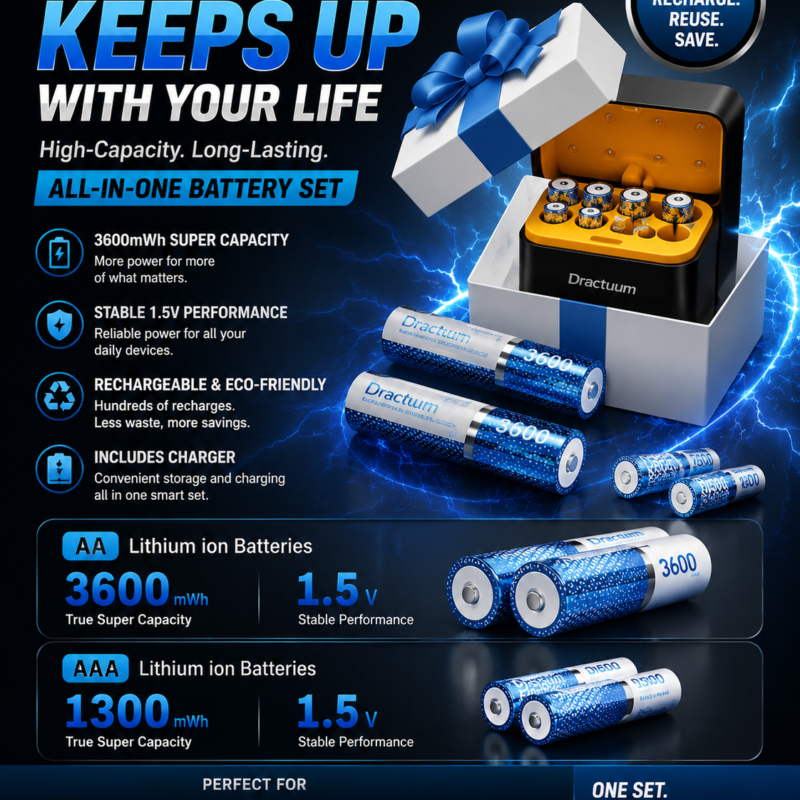
Prepper Recommendation: 1.5V Rechargeable Lithium AA & AAA Kit (with Charger)
This is a smart move toward energy independence. A mixed set of AA and AAA lithium rechargeables—plus a dedicated charger—covers most essential gear: flashlights, headlamps, radios, and small electronics. The key advantage here is consistent 1.5V output and up to 2000 recharge cycles, giving you reliable performance without constantly burning through disposables.
Fast recharge (~3 hours) means you can cycle batteries quickly during outages, especially if paired with solar or backup power. This isn’t just convenience—it’s sustainability under pressure.
Bottom line: if you’re building a long-term prep system, rechargeable lithium kits like this reduce waste, cut resupply risk, and keep your gear running when stores are empty.
-
Sale!

Prepper Recommendation: Ostation 2 Smart Battery Charging Station
This is where battery management stops being a mess and becomes a system. The Ostation 2 doesn’t just charge—it sorts, tests, and organizes up to 24 AA/AAA batteries automatically. It identifies good vs. bad cells, charges efficiently, and eliminates the guesswork that usually leads to dead gear at the worst time.
For a prepper setup running rechargeable batteries, this gives you control and consistency. Fast charging (~2.5 hours), polarity-free loading, and app tracking mean you can maintain a ready-to-go battery inventory without babysitting the process.
Bottom line: if you’re building a serious, reusable power system, this is a force multiplier. It turns loose batteries into a managed resource instead of a liability.
-
Sale!

Prepper Recommendation: Ostation 2 Pro Smart Battery Charger
This isn’t just a charger—it’s a power management system. The Ostation 2 Pro auto-detects battery type, handles both NiMH and Li-ion, and removes the usual guesswork with polarity-free loading and smart charging control. That matters when you’re tired, stressed, or working in low-light conditions.
For preppers running rechargeable setups, this gives you repeatable, efficient power cycles for AA and AAA batteries used in radios, lights, and essential gear. The app control and touchscreen are nice bonuses—but the real value is reliability and flexibility across battery types.
Bottom line: if you’re serious about reducing dependence on disposable batteries and want a controlled, reusable power system, this is a solid upgrade.
-
Sale!

Prepper Recommendation: BEVIGOR Lithium AAA Batteries (24-Pack)
Small batteries, big impact. These lithium AAA batteries are built for long-term storage and dependable performance—perfect for the gear that quietly matters most: headlamps, radios, GPS units, and backup electronics. They outlast standard alkaline batteries and handle extreme temperatures without dropping off when you need them most.
A 24-pack gives you depth—enough to stock multiple kits and avoid scrambling when supplies run thin. In a real situation, dead batteries turn good gear into dead weight. Don’t let that be your failure point.
-
Sale!

Prepper Recommendation: BEVIGOR Lithium AA Batteries (8-Pack)
When reliability matters, these lithium AA batteries deliver. Designed for long shelf life and consistent performance, they’re ideal for critical gear like flashlights, radios, and emergency kits. Unlike standard alkaline batteries, they hold power longer in storage and perform better in extreme temperatures—exactly what you want when the grid is down and failure isn’t an option.
Keep a pack in every go-bag and rotate into your core supplies. Power is one of those things you don’t think about—until you don’t have it.